
“Kuu kiurusta kesään,
puoli kuuta peipposesta,
västäräkistä vähäsen,
pääskysestä ei päivääkään”
An old poem, origin unknown, predicting the arrival of summer by observing the return of migrating birds. I remember hearing it first from my mother, and she probably heard it from her mother. The rhythm of the words made it easy to remember, ensuring that this vital information was passed on from generation to generation.
A moon from skylark to summer
Half a moon from a chaffinch
A little while from a wagtail
Not even a day from a swallow
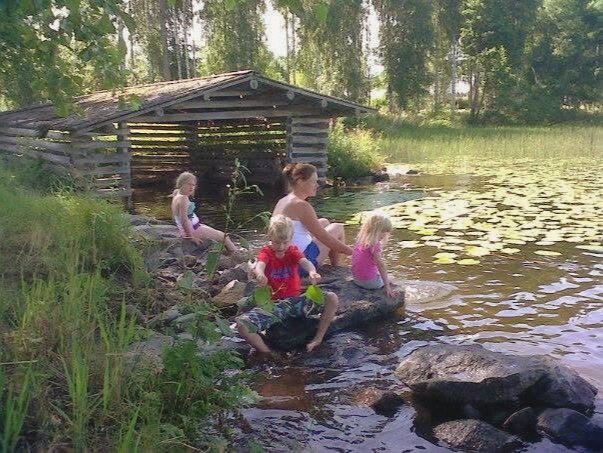
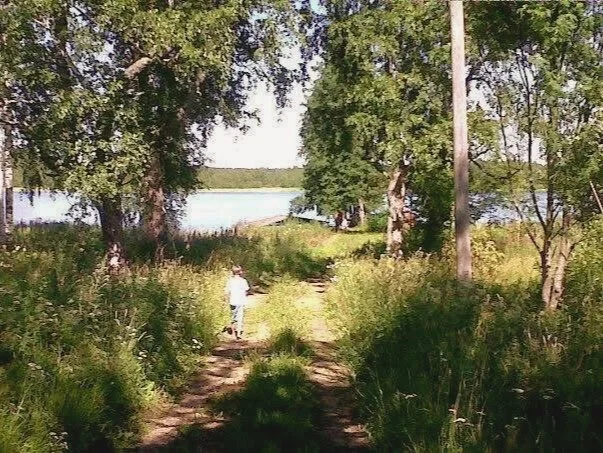
The swallows would arrive at once in late May, usually accompanied by other signs of summer, such as the lilac trees in the garden bursting into clusters of purple, pink and white blossoms. My mother would cut bouquets of these sweetly fragranced flowers, with their dark green leaves, and arrange them into a vase that she would place on the rickety white table on the stone veranda. This was her breakfast spot, as it was this side of the house that would receive the morning sun, and you could see the bright blue of Lake Pintele poke through between the giant spruce trees that lined the gravel road that passed our house from Valkeakoskentie to Kaitamo. One morning every year she would say: ‘The swallows are here’ looking up to the eaves. And there they were, flying in circles around the house. ‘They are making nests’ she would comment. We knew, of course, but their arrival deserved to be marked, and we all looked up and admired their flight. ‘Summer is here’ she said, and smiled, taking another sip of her coffee.
The swallows who spent summers at my home in Palkane, southern Finland, made a 10,000 kilometre journey every year. When it was their time to leave in August, they headed south over the Baltic, through Eastern Europe, over the Mediterranean, across the Sahara Desert to overwinter in Eastern Africa, feasting on insects of the savannas, wetlands and sugarcane fields. When the time came to return home, they would start their 6-week flight back home.
Swallows have an incredible internal compass. The swallows that returned each year had chosen my home as their home, locking it into their memory as a safe place to breed and raise their chicks. They navigate using the sun and the stars, orienting themselves using the rotation of the constellations around the North Star. As they reach the Baltic Sea, they rely on memory, recognising familiar coastlines, smells, and wind patterns to find their way back home.
“Pääskyset tuli” my mother would write in her journal. “The swallows arrived.” Her journal, the spiral bound calendar from Unicef that she requested as a Christmas gift - would track the change of the seasons, her children growing from toddlers to adults with families of their own, appointments from the mundane to the significant. Every day she would note down the weather, the temperature and any observations and sightings: there was a lynx amongst the trees behind the log shed, a storm that felled several old spruce trees that had lined the drive to the house like sentinels for a hundred years, and meticulous records of planting and harvesting.. Over the years, her journals would become archival records of the effect of warming winters; the date she records the arrival of the first snow creeps from November to late December. The date when the ice on lake Pintele is thick enough to walk on is slowly pushed back to January.
When me and my siblings were young we thought my mother’s weather records were just one of her quirks. I now view her journals as an act of devotion. For fifty years she was bearing witness as a guardian of this Northern corner of land, seeing the impact of her fellow humans over the decades.
Now the skylarks arrive as early as March. Schoolchildren, when first hearing this old poem, make a point of correcting information that is out of date.
“-3C, first snow.”